Building Coherence Across Enterprise Campaigns
Marketing Journeys Campaign Builder
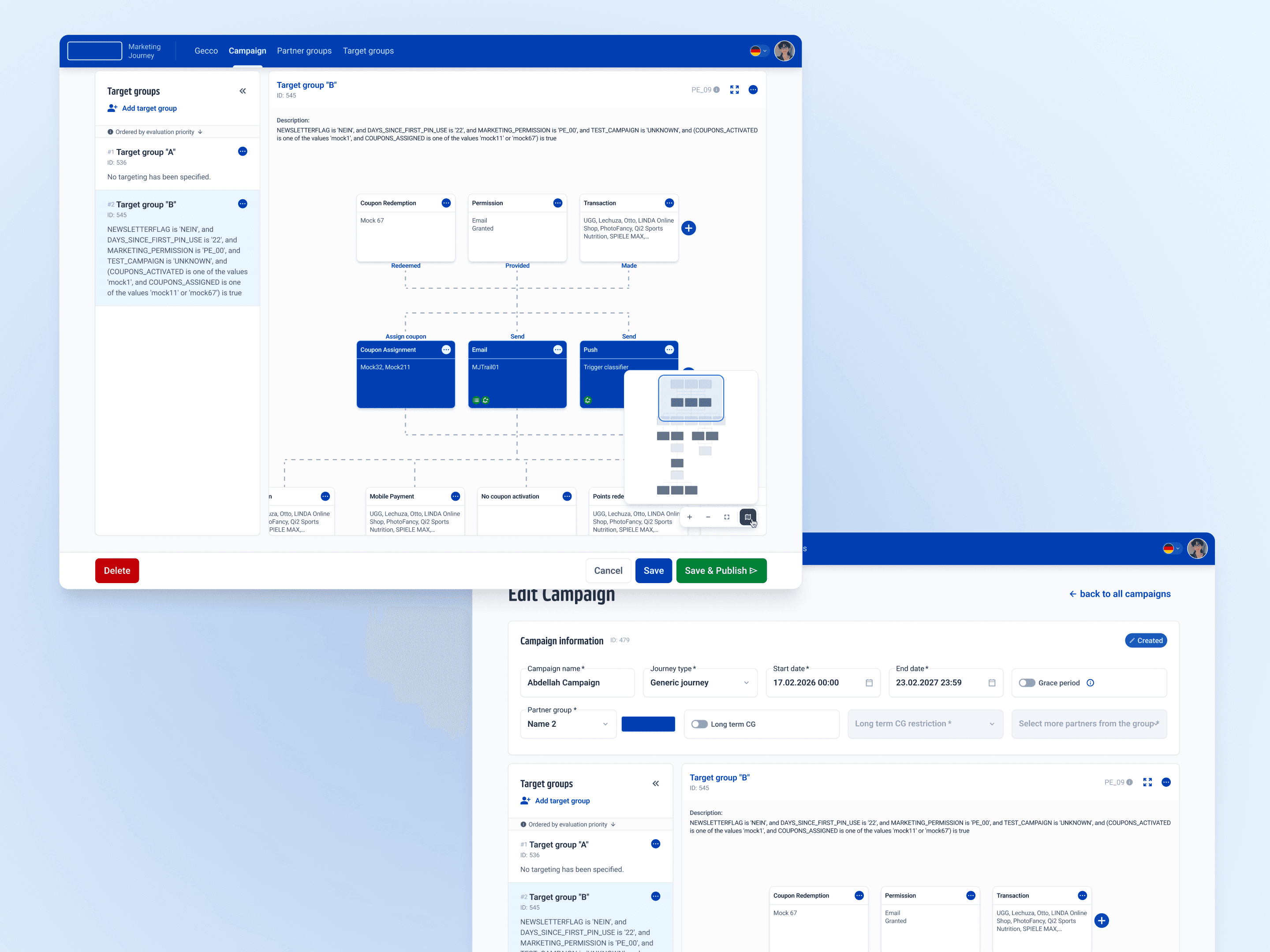
The Campaign Builder: From fragmentation to visual orchestration
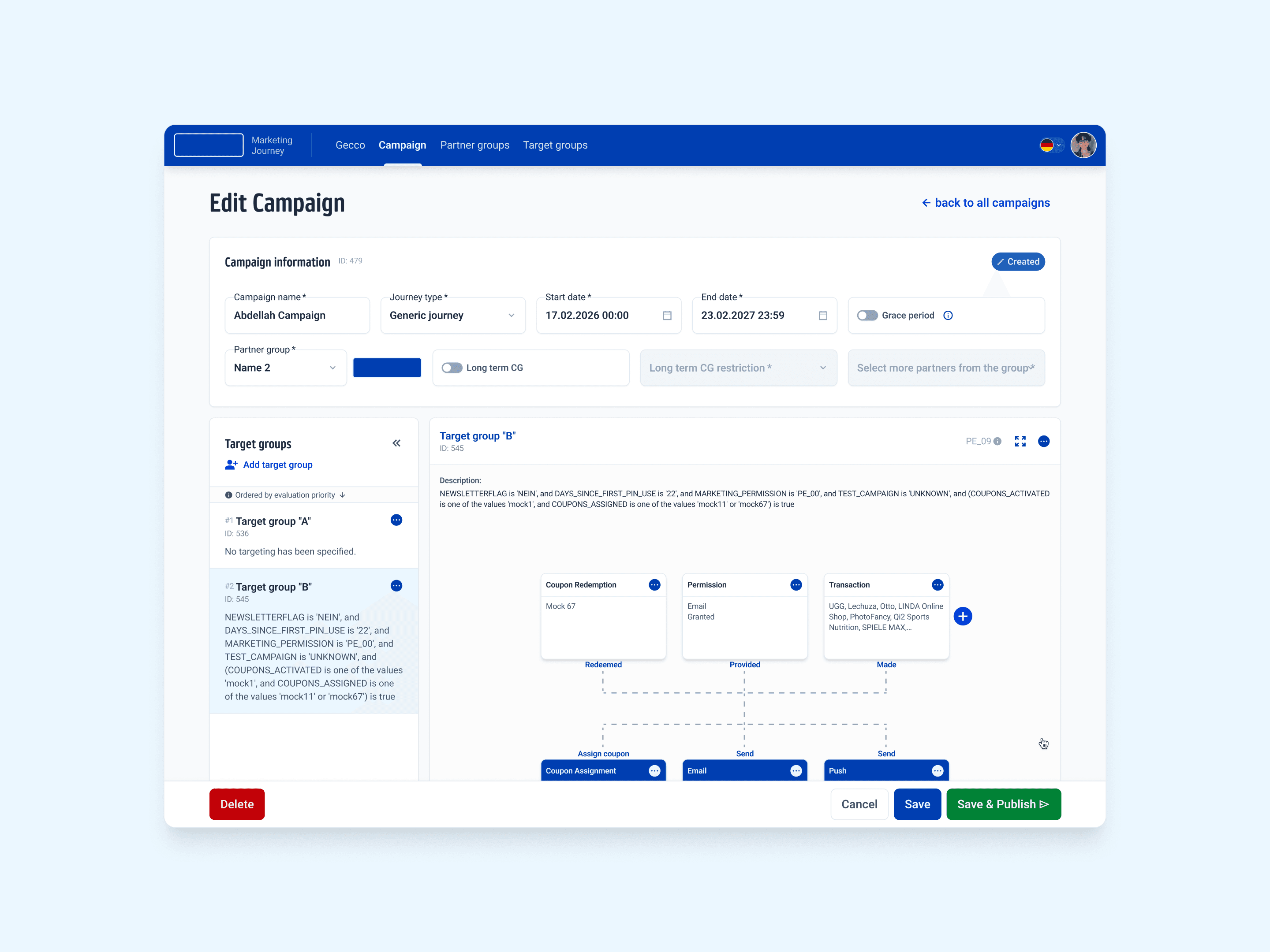
The new platform consolidated the fragmented workflow into a single, unified interface. Agents now define a campaign once (name, dates, partner) then build target groups with specific member segments.
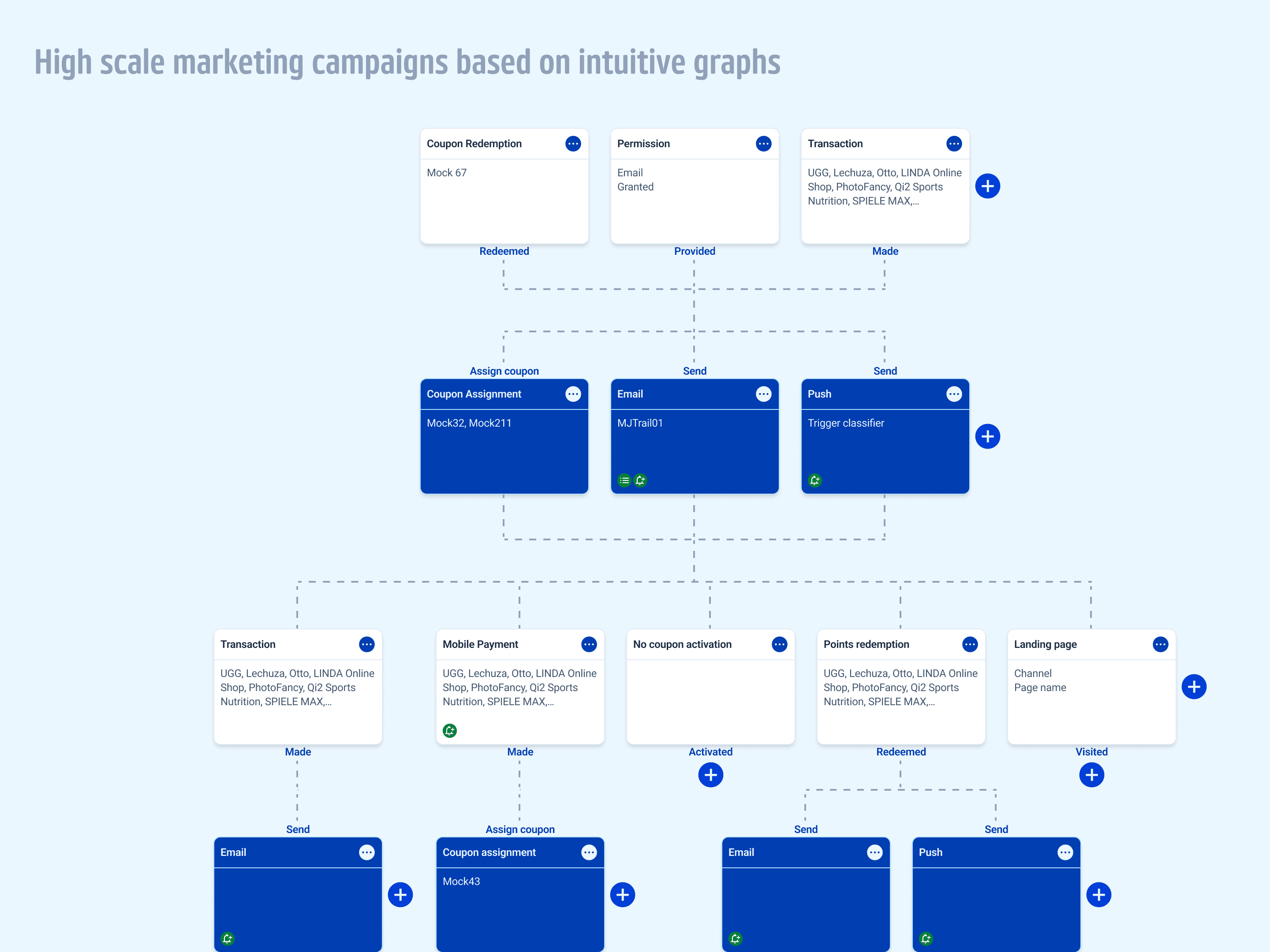
Within each target group, they orchestrate the entire member-to-business-action flow using a node-based graph.
A member performs an action: transaction, coupon redemption, partner interaction. That triggers a business action: email, push notification, or coupon assignment.
The graph makes this logic visible and editable in one place, eliminating the need to toggle between systems.
But the real power was in the granularity. Targeting wasn't just a campaign-level filter. It was available at every level of the system (at the target group level for broad segmentation, and at the individual node level for precise refinement).
An agent could filter by member age at the campaign group level, then add location-based filtering on a specific node within the graph. This granular targeting model meant agents could design workflows as nuanced as their business logic required, without bloating the interface.
- My role
- Sole Product Designer
- Timeline
- August 2025 – Present
- What I did
- Design system foundation (tokens, component library) Campaign builder workflows (node graph, advanced targeting, multi-level filtering) Stakeholder alignment through iterative prototyping and user feedback sessions
Impact
Agents went from juggling multiple systems to orchestrating campaigns in a single interface. The core workflows, campaign creation, publishing, and management, were redesigned to cut the friction and handoffs that came from switching tools mid-task.
3 tools → 1
Consolidated Workflow
2 crews
Adopted Our Design System
Building the foundation in parallel
The Campaign Builder couldn't have shipped as fast without a unified design language.
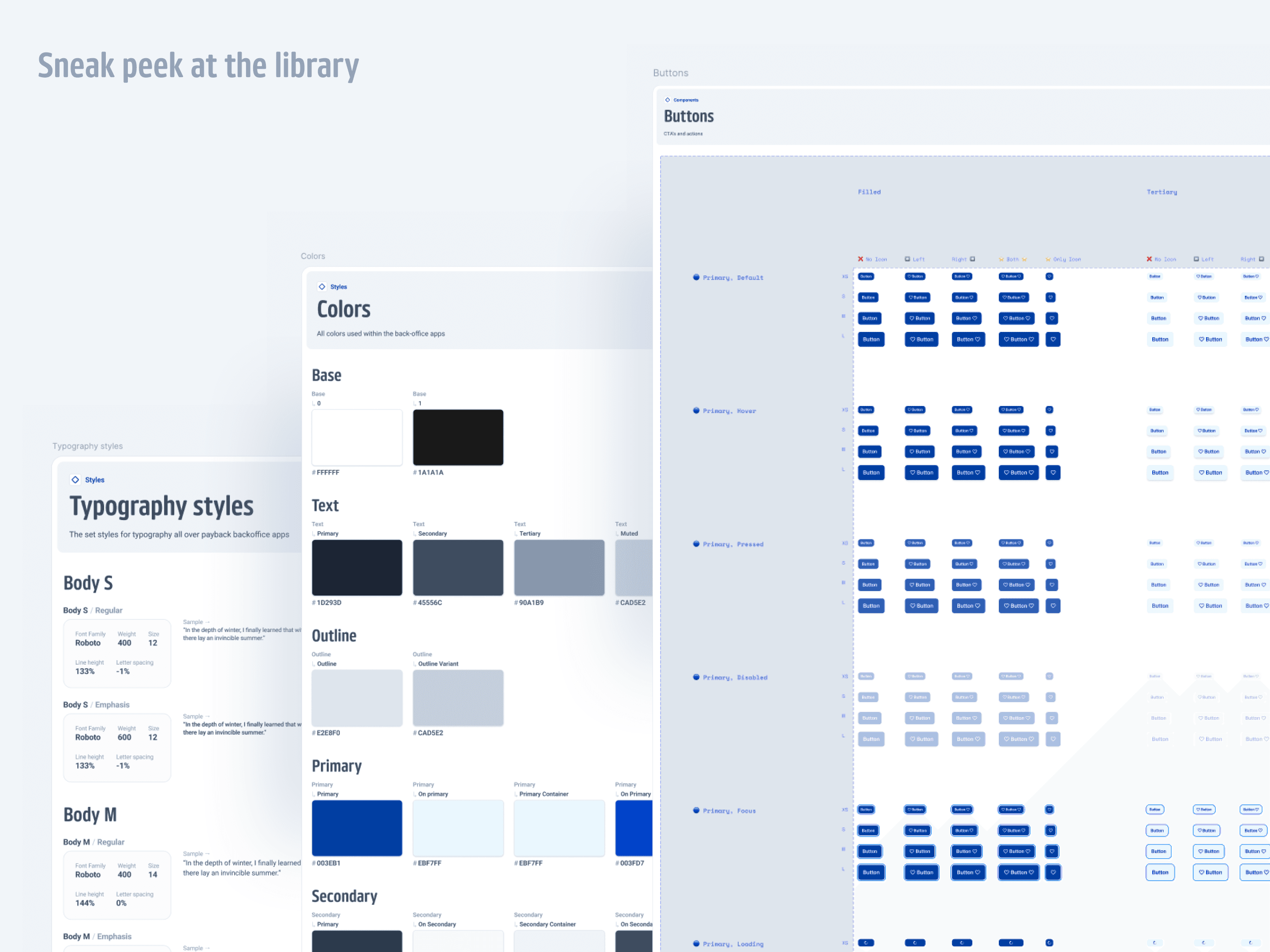
With that said I didn't wait for a perfect system to exist first. I built the token foundation (color, typography, spacing) in parallel with the product work, using an existing style guide as the starting point.
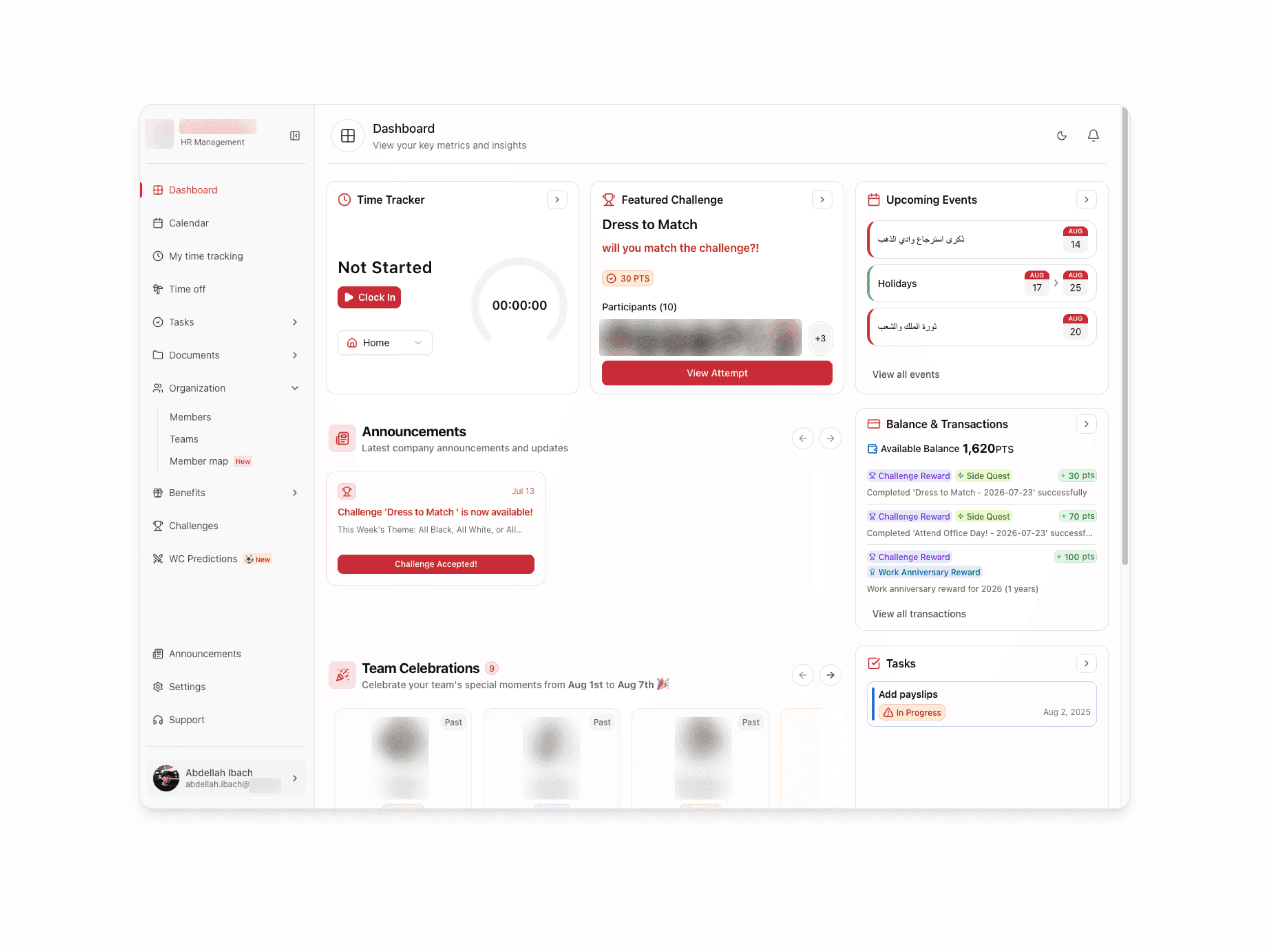
As the Campaign Builder took shape, I standardized the components it needed: input fields, buttons, tags, table components, headers, footers, pagination.
Each component was token-based, meaning changes to the core design language rippled automatically across the entire interface.
The leverage came when other crews saw what we'd built. They adopted the component library and token system.
Now, multiple teams across the organization are shipping features using the same design language, the same components, the same patterns. A fragmented visual ecosystem became coherent. Handoffs to engineering got cleaner. Feature velocity increased.
Navigating established habits
The hardest part wasn't designing the new system. It was replacing the old one in people's minds.
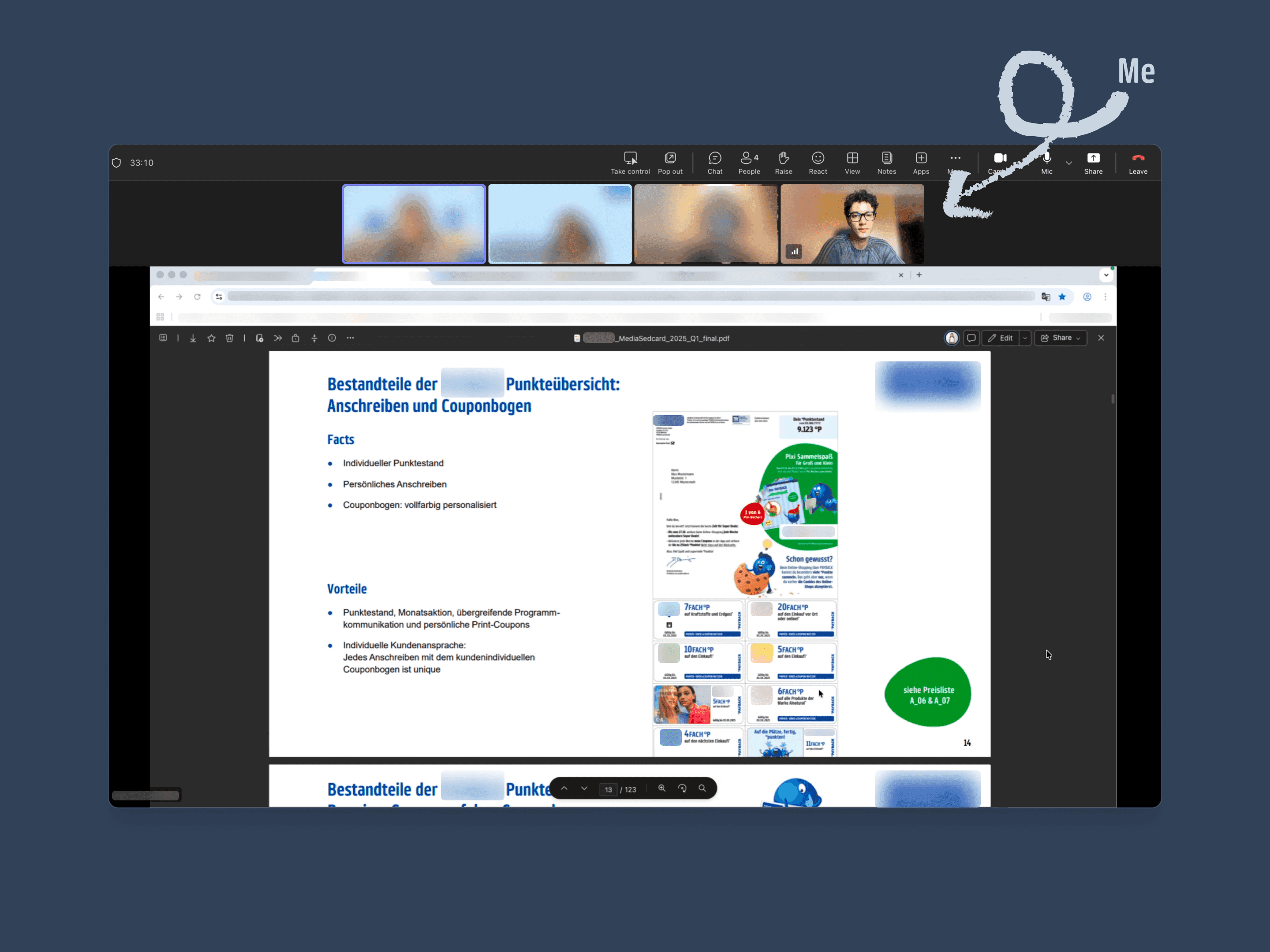
Agents and business representatives had adapted to the old application, however imperfectly.
Every new prototype we presented carried the risk of pushback, not because the design was wrong, but because it was different. Familiarity is its own form of inertia.
My approach was to stay grounded. Every design decision we brought to stakeholders was anchored in a concrete productivity outcome (time saved, tasks consolidated, handoffs eliminated). We weren't selling a prettier interface. We were making a case for a better workday.
That framing shifted the conversations. When stakeholders pushed back, we had something real to point to. Not a vision, not a principle, a specific friction the new design removed. That kept the dialogue productive and the iterations focused.
The lesson:
in enterprise tool redesign, ambition has to be calibrated. Shipping something real that improves daily work is always more valuable than shipping something impressive that disrupts established workflows without a clear return.
Working in shorter loops
The project moved faster when design stopped being a separate phase and became part of an ongoing conversation.
Feedback before polish
I kept users and stakeholders close to the work through frequent reviews and early prototypes. This exposed incorrect assumptions before they became expensive implementation problems.
Instead of presenting finished solutions, I used design to create focused conversations around workflows, edge cases and operational constraints.
Designing for momentum
Work was shared as soon as it was clear enough to evaluate. Engineering and business stakeholders could respond earlier, while there was still room to adjust the direction.
This reduced prolonged design cycles, shortened handoffs and helped the team make decisions with greater confidence.
Speed came from reducing the distance between a decision and the feedback needed to validate it.
Contact
Get in touch
I usually reply within 24 hours. Tell me what your team is working on.